From the mushroom-shaped rock of Balandra to the open-ocean swells of Ensenada Grande, La Paz beaches are among the most beautiful — and least crowded — in all of Mexico.
The Sea of Cortez Difference
La Paz sits on the western shore of the Sea of Cortez, the narrow inland sea that Jacques Cousteau called "the world's aquarium." The result is a coastline unlike anything on the Pacific side of Baja — calm, warm, crystalline water ranging from pale jade to a deep cobalt blue, backed by desert mountains and cacti-studded headlands.
The beaches here are not resort beaches. Most have no hotels, no umbrellas for rent, and no cruise ship crowds. What they have is emptiness, silence, and water so clear you can count the fish beneath your kayak.
Playa Balandra — The Iconic Mushroom Rock
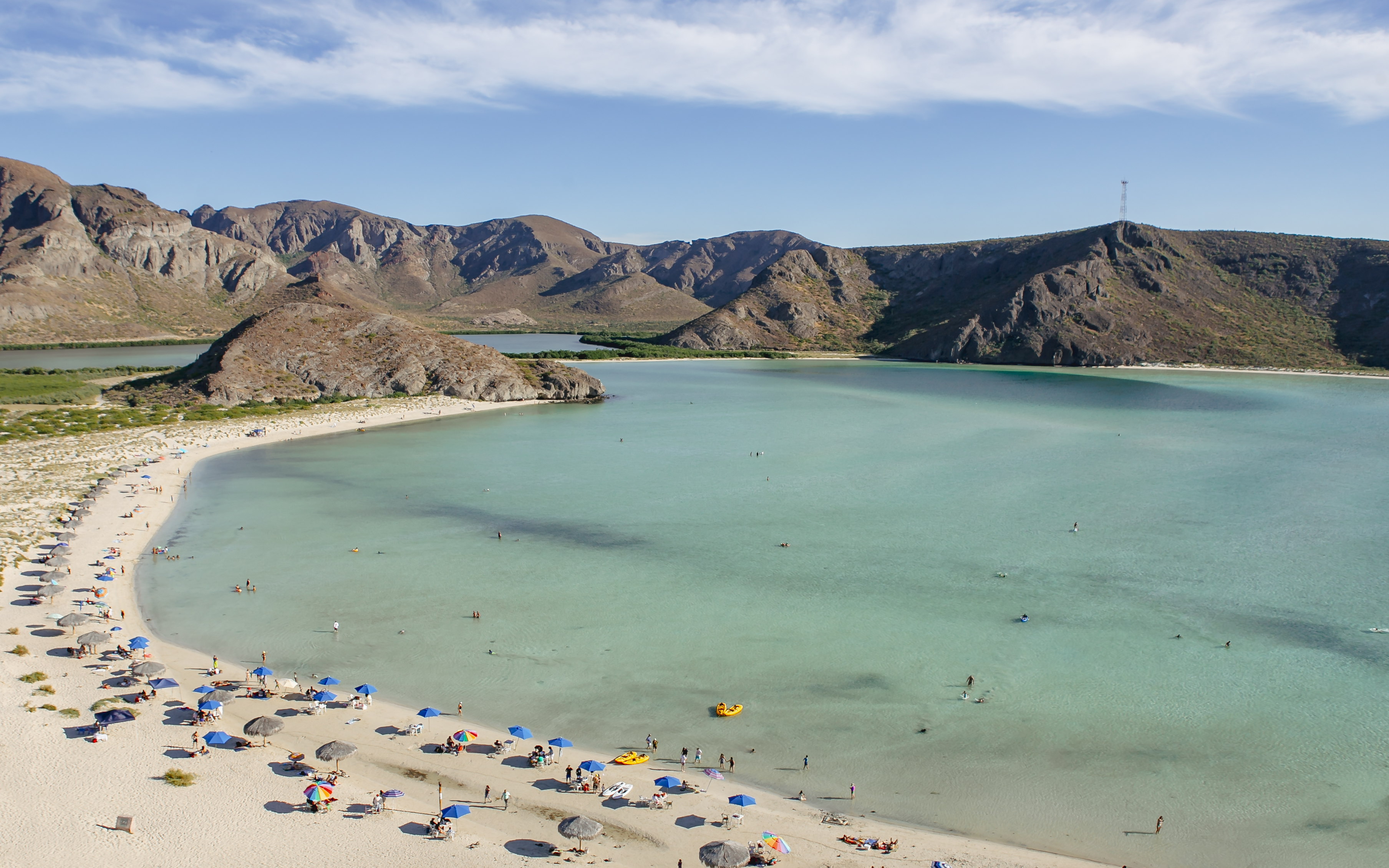
If there is one image that defines La Paz, it is Balandra. A protected nature reserve and UNESCO-recognized site, Balandra is a shallow lagoon separated from the open Sea of Cortez by a narrow sandbar. The famous hongo — a mushroom-shaped rock balanced on its stem just above the waterline — has become the symbol of the city itself.
The water in the lagoon rarely exceeds waist depth, making Balandra one of the safest swimming beaches in Baja. The palette shifts from pale emerald near the shore to turquoise in the deeper channels. Arrive before 10am on weekends to claim a spot before local families fill the palapa tables.
Getting there: 24 km north of La Paz centro on the Pichilingue highway. Parking is free; the reserve is day-use only with no overnight camping.
Ensenada Grande — The Wild One
A one-hour panga ride from Pichilingue — or a dramatic overland approach on a rough dirt track — Ensenada Grande is the payoff for travelers willing to work for it. Located on Isla Partida, one of the uninhabited islands that dot the northern mouth of the bay, this deep crescent of white sand catches real open-water swells and has zero infrastructure: no palapas, no vendors, no shade except what the cliffs provide at either end.
Snorkeling off the rocks at the bay's southern arm reveals sea lions, colorful reef fish, and — in the right season — mantas gliding in the current below. Kayak camping is popular; permits are required and the island is protected as part of the Islands of the Gulf of California biosphere reserve.
Playa El Tecolote — The Local Favorite
The last beach on the Pichilingue peninsula before the bay opens to open sea, El Tecolote is where La Paz locals come on Sundays with coolers, fishing rods, and entire extended families. A row of seafood palapas lines the upper beach serving cold Pacífico, fresh ceviche, and whole fried fish pulled from the Sea of Cortez that morning.
The water at El Tecolote is calm on most days — gentle chop, light current — and shallow enough for safe swimming a long way out. Kayak and paddle board rentals are available from the palapas. On weekdays the beach is almost deserted; on summer weekends it fills completely by noon.
Across the channel: On a clear day you can see Isla Espíritu Santo — the island UNESCO has called one of the world's great natural wonders — from the shoreline. Day tours depart from El Tecolote's palapa row.
Playa El Coromuel — Closest to Town
Only 5 km from La Paz's malecón, El Coromuel is the most accessible beach for travelers staying downtown. It trades the dramatic isolation of Balandra for convenience — a short taxi ride, a proper waterfront palapa restaurant, a small pier, and calm, swimmable water.
The coromuelito wind — a warm afternoon breeze funneled through a gap in the mountains — reliably fills in around 2pm most days, making El Coromuel a favorite for kitesurfers and windsurfers. If you're just swimming or snorkeling, arrive early before the wind picks up.
Playa El Caimancito — Urban Snorkeling
The smallest beach on this list and the only one inside La Paz city limits, El Caimancito is essentially a pocket-sized marine sanctuary a short walk or taxi ride from the malecón. The rocky reef just offshore is a designated protected snorkeling zone — anchor-free, boat-free — and home to an unusually dense population of trumpetfish, parrotfish, damselfish, and the occasional sea turtle.
The beach itself is coarse sand and pebble, not the soft white of Balandra. But the snorkeling is the draw, and for travelers who want to see reef life without chartering a boat, Caimancito delivers.
Tip: Bring your own mask and fins. Rentals exist but supply is inconsistent. Entry is free.
Playa La Concha — Panoramic Sunset Views
La Concha sits inside a broad, sheltered bay 10 km south of downtown, behind the La Concha Beach Resort. The beach faces west-northwest, which means it catches La Paz's legendary afternoon light and offers uninterrupted views across the water toward the mountains of the peninsula.
The bay is deep and calm — popular with stand-up paddleboarders and kayakers who want protected flat water — and the surrounding reef shelters nesting sea turtles during nesting season. La Concha is also one of La Paz's best sunset beaches: arrive at 6pm with a cold drink and watch the sky go pink, then orange, then a deep coral that reflects perfectly off the glassy surface of the bay.
Planning Your Beach Day
Best season: October through June. July and August bring chubasco storm season — afternoon thunderstorms that develop quickly over the mountains. The sea stays warm (26–30°C) year-round.
What to bring: Sun protection is non-negotiable. The Baja sun at this latitude is intense even in winter. Reef-safe sunscreen is required at Balandra and encouraged everywhere else. Most beaches have minimal shade; a portable umbrella is worth carrying.
Drinking water: El Tecolote and El Coromuel have restaurants. Balandra has vendors near the parking area. Ensenada Grande and Caimancito have nothing — bring your own.
Ferries to the islands: Day tours to Isla Espíritu Santo and Isla Partida depart from the Pichilingue ferry terminal and from El Tecolote. Book through your hotel or at the waterfront kiosks on the malecón. Most tours include snorkeling, kayaking, and lunch.